Photometric Proof Before Construction
We show illuminance and uniformity results in calculation reports ahead of procurement, which prevents over-lighting, under-lighting and expensive change orders after poles are set.
To light public spaces to the right level, in the right places, with efficient and well-documented systems that reduce risk, energy waste and nighttime glare.
Who We Are
TECHNILUM is an electrical contractor specializing in roadway, area and decorative lighting for public agencies and institutional owners. Our scope includes lighting design support, underground conduit and conductor installation, pole foundations, luminaire retrofit, control systems and long-term maintenance. We work with municipalities, transportation departments and utilities on projects ranging from neighborhood LED conversions to interchange lighting and park pathways. Crews include licensed electricians and lineworkers who understand grounding, voltage drop, fault protection and utility coordination, and every installation ends with documented testing, as-built records and fixture inventory data.
Good lighting balances safety, energy cost and community character, and TECHNILUM helps clients in and across the region strike that balance. We measure existing light levels, evaluate pole spacing and condition, model proposed layouts and recommend luminaires with appropriate lumen output, color temperature and optical distribution. Because we also maintain what we build, we pay attention to access, serviceability and spare parts from the start. That attention keeps outage rates low and gives cities a lighting system they can operate and budget with confidence.
Our Mission
To light public spaces to the right level, in the right places, with efficient and well-documented systems that reduce risk, energy waste and nighttime glare.
Our Advantages
We show illuminance and uniformity results in calculation reports ahead of procurement, which prevents over-lighting, under-lighting and expensive change orders after poles are set.
Outage reports are triaged by safety risk, with exposed wiring and knocked-down poles handled first and routine lamp outs scheduled in grouped, efficient routes.
Shielded luminaires, appropriate color temperatures and careful aiming limit light trespass and sky glow, which keeps neighbors, ecologists and astronomers on your side.
We document before and after wattage by fixture so energy savings are calculated from measured data rather than brochure claims.
Every pole, luminaire, controller and circuit is tagged and logged with location and installation date, creating a living inventory that supports budgeting and warranty claims.
Lighting circuits carry real voltage in public right-of-way. Our crews are licensed and trained for energized work safety, utility coordination and cable fault location.
Fixture, wattage, controls, pole type and repair history are held per asset, so an outage, a claim or a budget request is answered from data.
Reported outages are repaired within agreed days and closed against the asset record, as dark streets are the complaint residents actually make.
Baseline and post-retrofit consumption are measured and compared, because a projected saving and a billed saving are frequently not the same number.
From Our Desk
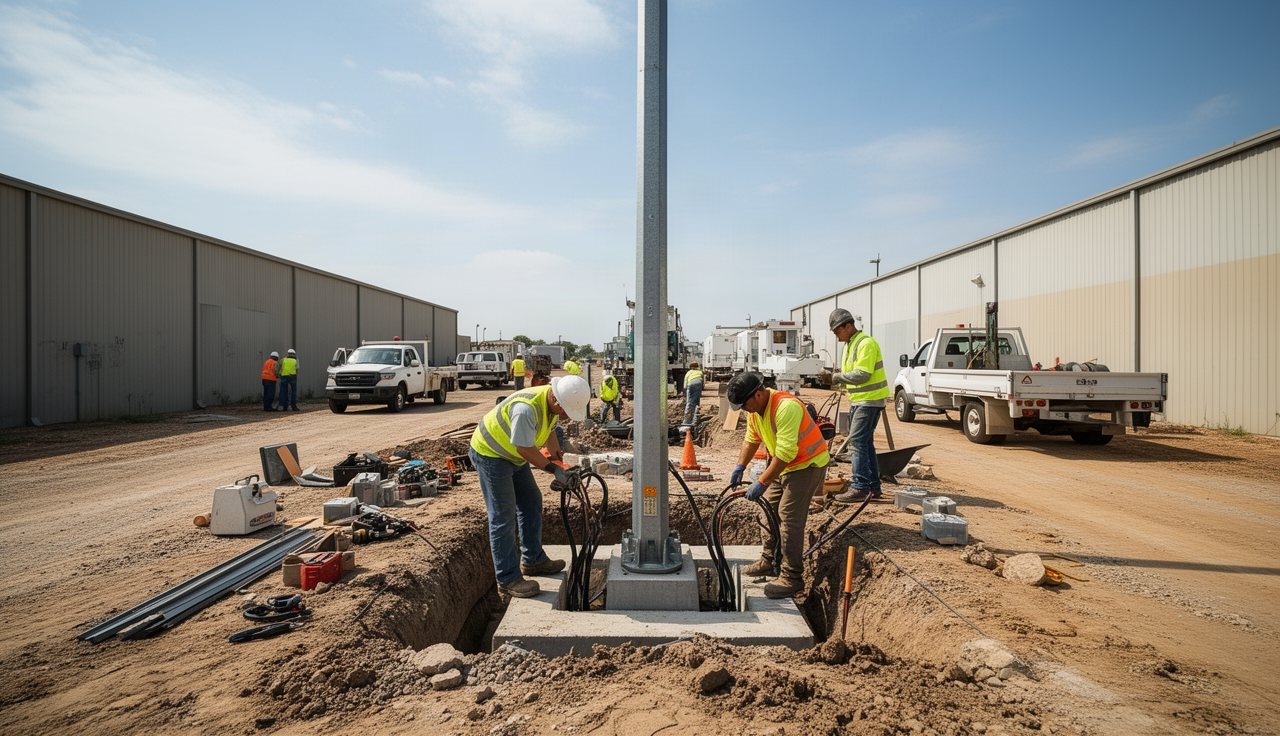
Adaptive dimming saves energy, but it must respect conflict areas and crossings. Here is how to build a schedule that keeps safety first.
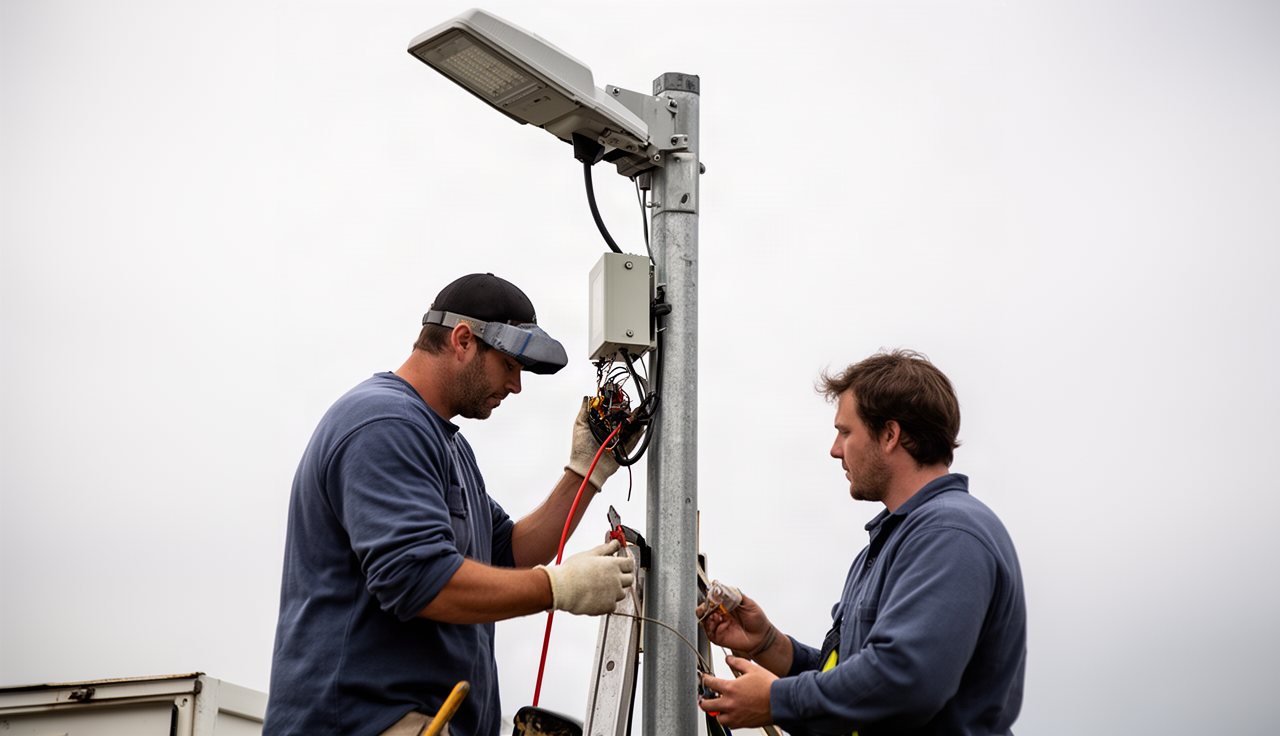
Complaints often trace to glare and color choices rather than brightness. A look at how to select LED color temperature and shielding that residents will accept.
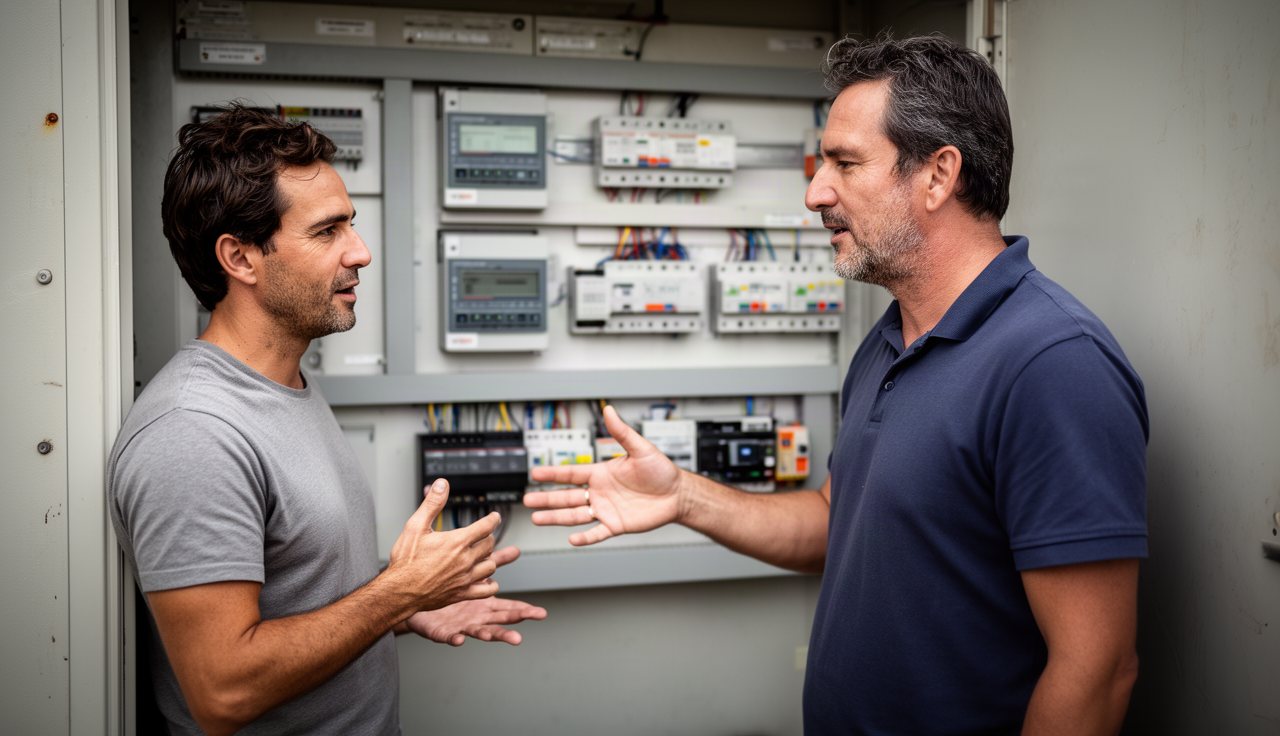
Success depends on more than fixture price. We cover inventory accuracy, tariff changes, optical selection and warranty terms that make or break a large retrofit program.

Undersized conductors cause dim fixtures and early driver failures. We explain how to size circuits and place feed points on long rural and highway runs.
Client Feedback
The LED conversion was done on schedule and the street level results matched the photometric report. Residents noticed the difference immediately, and our energy bill dropped in the first full quarter.
High-mast work at night is not forgiving. Their crew was organized, safe and finished each lane closure ahead of time. Documentation on every tower was thorough.
We needed lighting for a trail through a sensitive area. They proposed shielded fixtures and adaptive dimming and trenched carefully around root zones. The result is safe and quiet at night.
Send TECHNILUM your fixture counts or pole list and we will return a photometric approach, a schedule and a documented energy savings estimate.
Lighting layouts start with photometric calculations against recognized IES recommended practice, so illuminance, uniformity and glare control are demonstrated on paper before a single pole is set.
Our Services

Installation and maintenance of high-mast towers, interchange lighting and tunnel luminaires that must perform under demanding traffic and safety conditions. Work includes lowering device service, lantern carriage inspection, ballast or driver replacement and coordination of lane closures with traffic control crews for safe access.
Request a Quote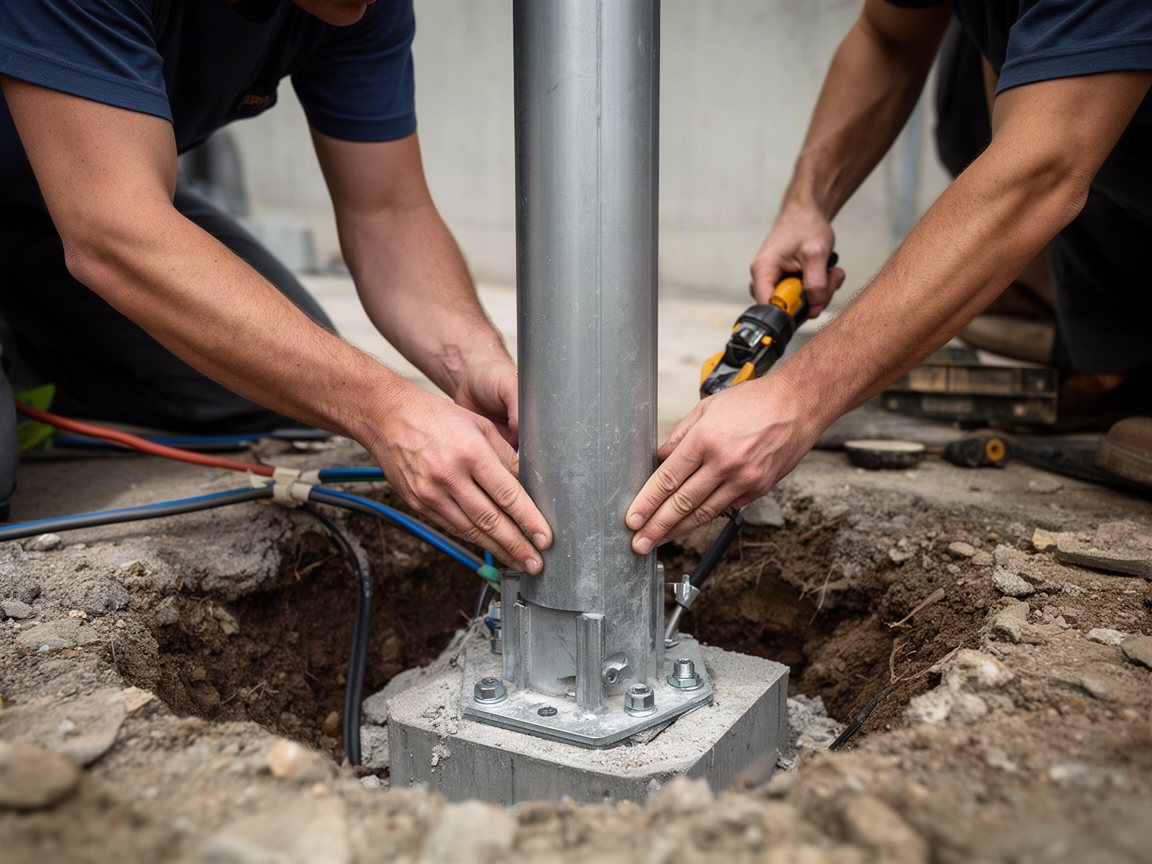
Ornamental poles, bollards, pathway luminaires and festoon systems designed to serve walkers, cyclists and public gathering spaces. We balance vertical illuminance on faces and surfaces with glare control and dark sky practices, selecting fixtures that match the district character while remaining serviceable by municipal staff.
Request a Quote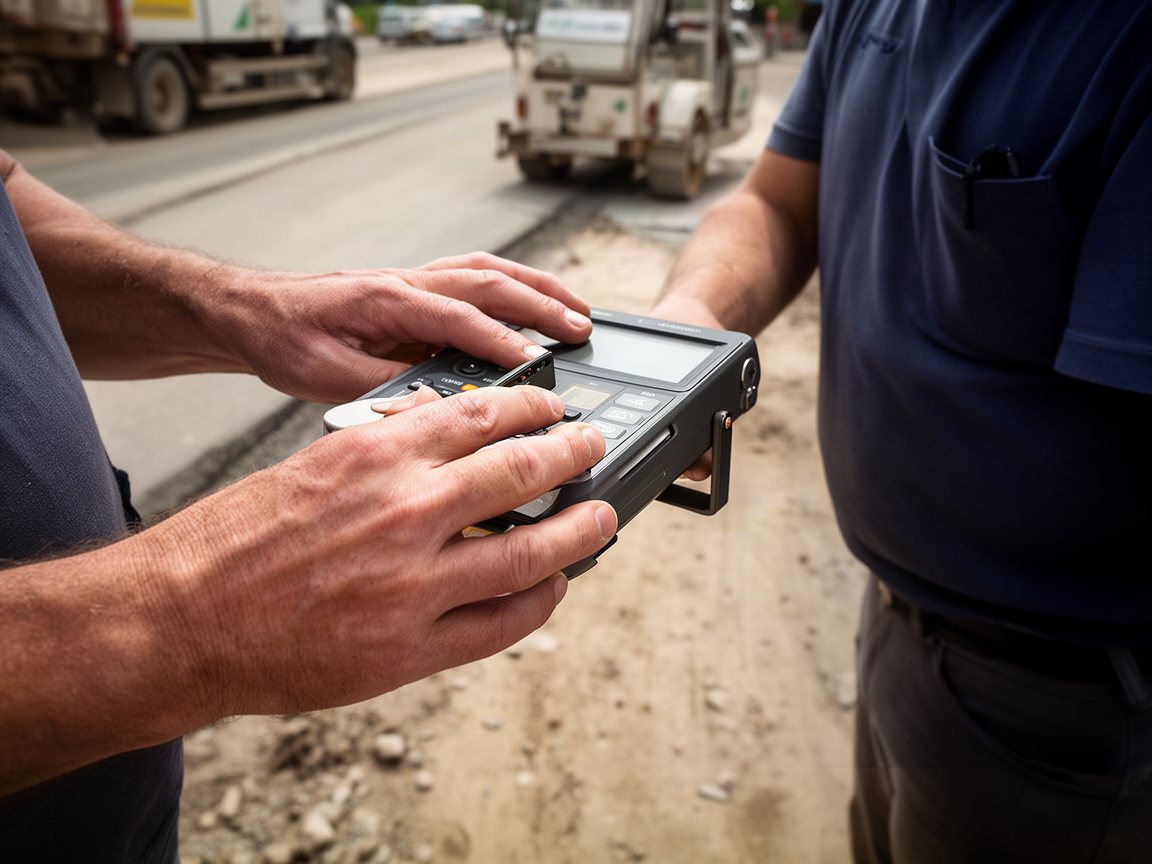
Installation of networked lighting controllers, photocells and nodes that report status, energy consumption and faults to a central management platform. Schedules and dimming profiles can be tuned by street type and hour, reducing energy use late at night while preserving safety lighting at intersections and crossings.
Request a Quote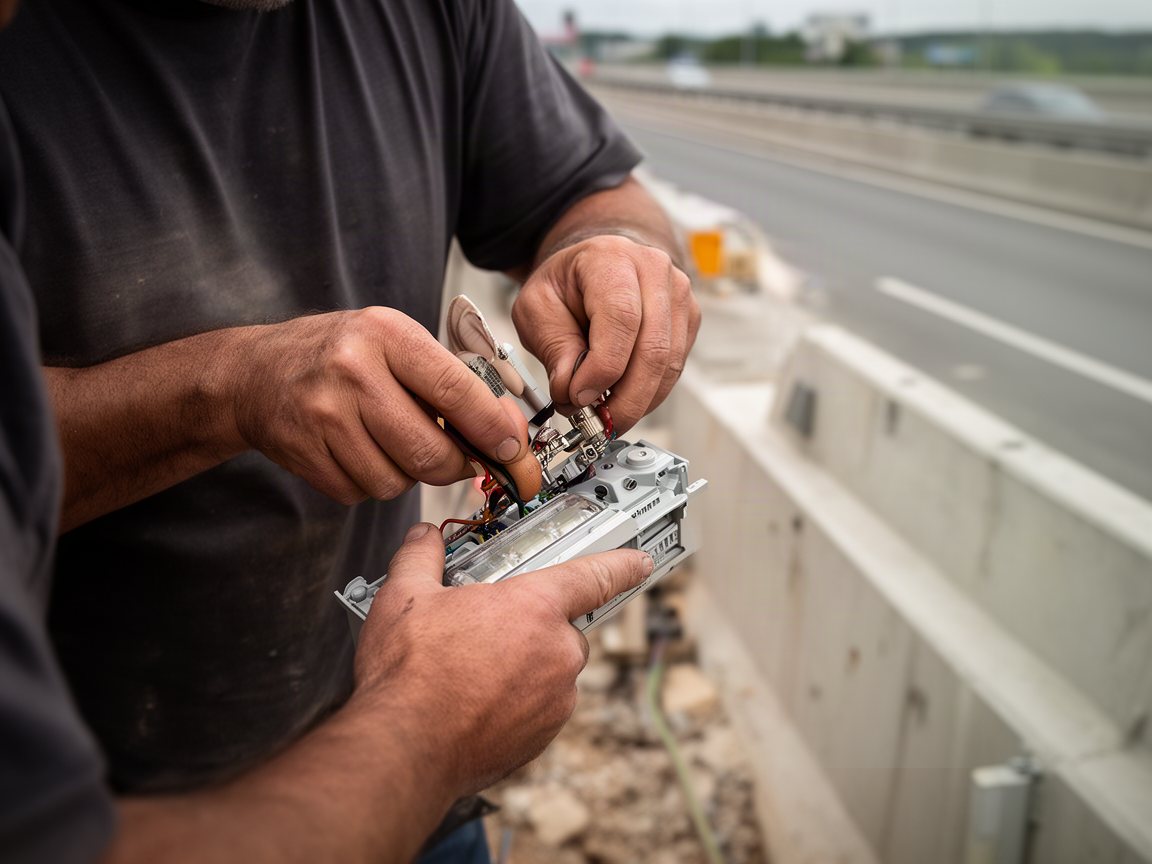
Floodlighting and area lighting for parking facilities, sports fields, plazas, rail yards and industrial yards, with spill and glare control to protect neighbors. Layouts are verified against project-specific lighting criteria, and installation includes aiming, shielding and verification measurements with a calibrated light meter.
Request a Quote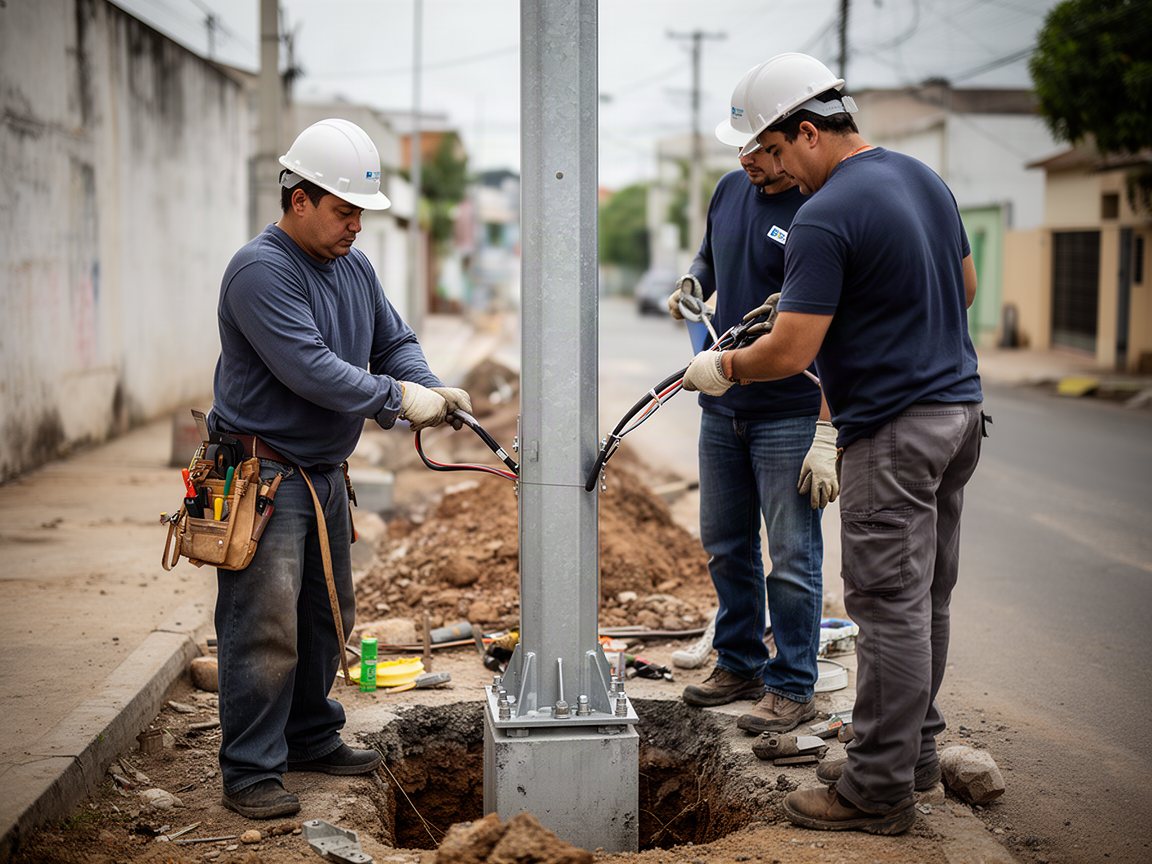
Construction of lighting systems from trench to luminaire, including conduit, wire, pull boxes, drilled or precast foundations, anchor bolt assemblies, poles and bracket arms. We follow the National Electrical Code and local utility requirements, test insulation resistance and continuity, and verify grounding before energizing each circuit.
Request a Quote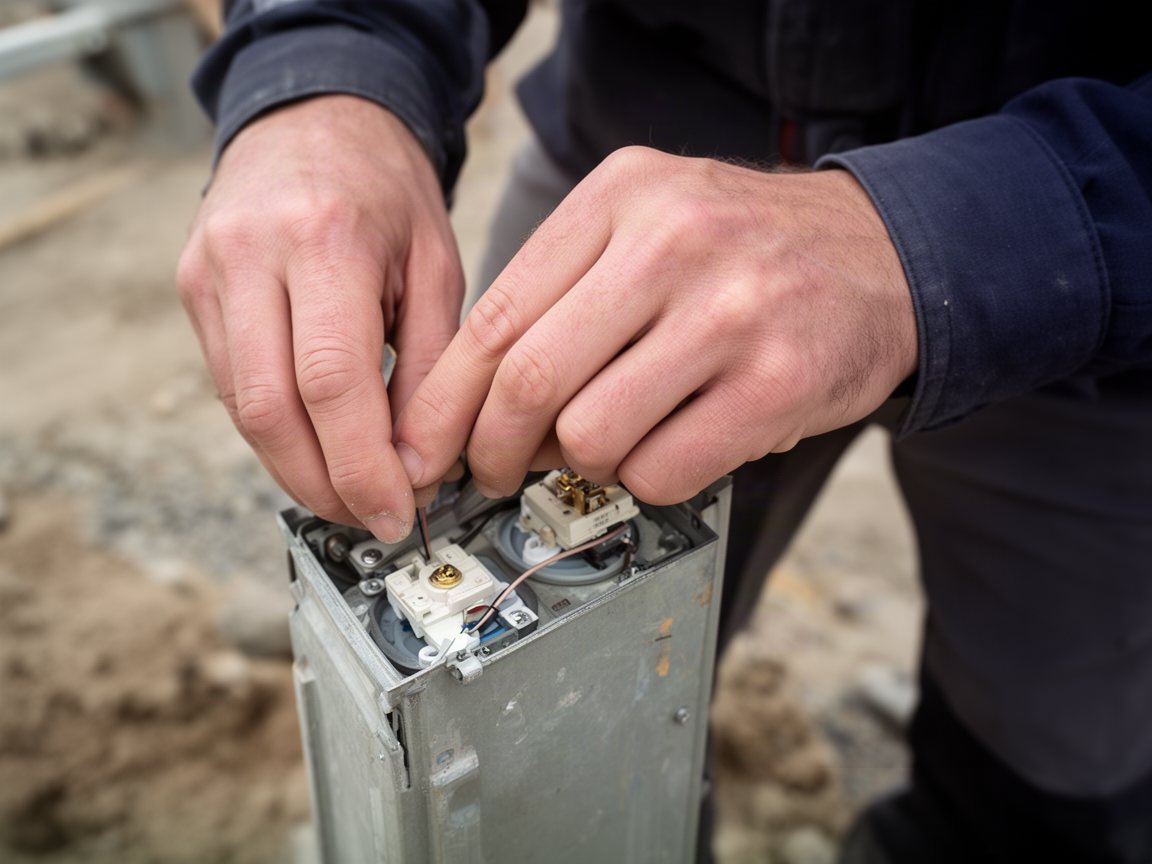
Scheduled group relamping and driver replacement, outage patrols, cable fault location and repair of poles damaged by vehicle impact or storms. Each work order is logged against a pole identification number, so patterns such as repeated cable faults or failing fixtures can be traced and resolved at root cause.
Request a Quote
Lighting calculations and layout development using manufacturer photometric files and recognized IES roadway lighting guidance, covering average illuminance or luminance, uniformity ratios and veiling luminance for each roadway class. We recommend pole heights, spacing, mast arm lengths and luminaire distributions that meet the criteria with the fewest fixtures, then deliver calculation reports that engineers can review.
Request a Quote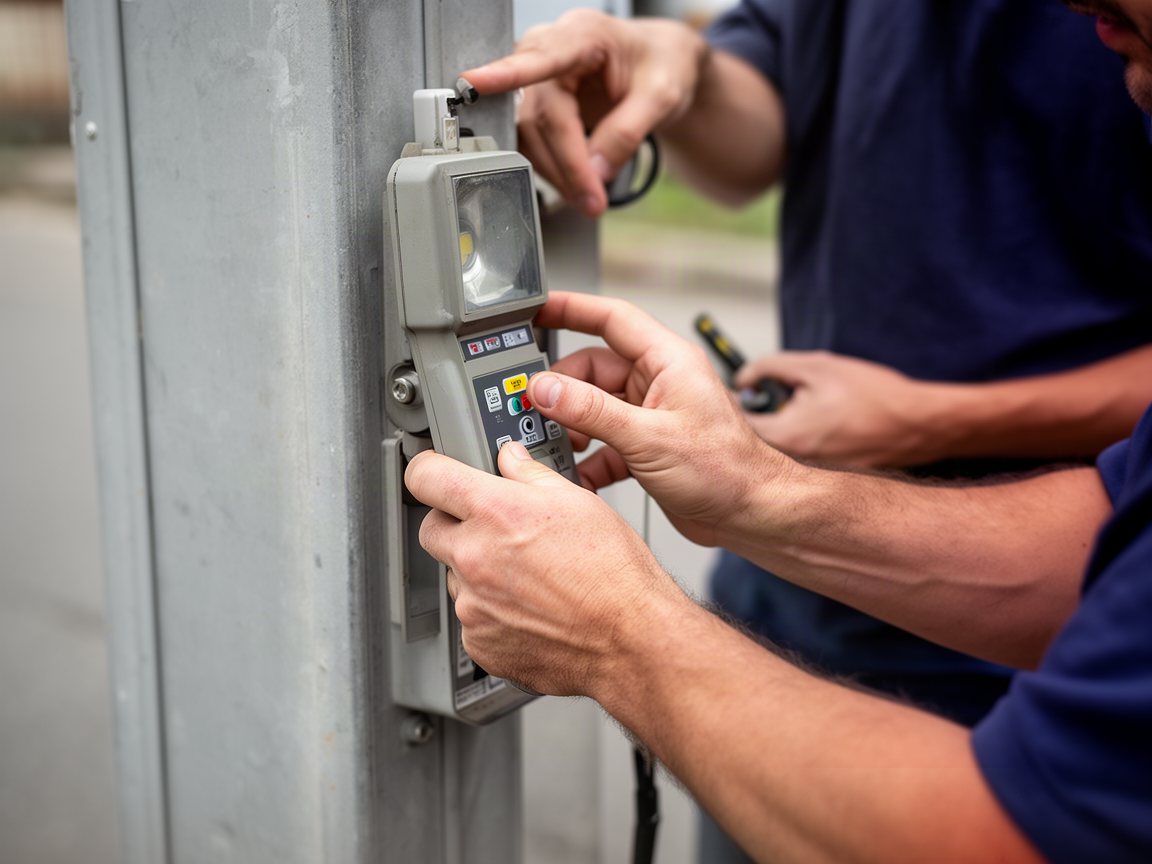
Large-scale conversion of high-pressure sodium and mercury vapor luminaires to LED, including fixture audit, photometric verification, procurement coordination and nighttime installation crews. We select color temperature and optical patterns suitable for the street type, document every replaced luminaire by location and wattage, and provide the data utilities need to adjust billing tariffs.
Request a QuoteQuestions & Answers
Target levels come from recognized IES roadway lighting recommendations, which vary by roadway classification, pedestrian activity and conflict areas. We run photometric calculations for illuminance or luminance and uniformity, then adjust pole spacing and luminaire distribution until the criteria are met efficiently.
Utility-owned systems have their own rules, and some work must be done by utility crews. We coordinate with utilities on ownership, tariffs and permitted work, and we perform what is allowed under contract while keeping responsibilities clearly defined.
Most agencies choose between roughly 3000K and 4000K. Warmer light reduces glare and blue content and is often preferred in residential areas, while neutral white can aid visual clarity on arterials. We help weigh community feedback, dark sky goals and visibility needs.
Yes. Many luminaires accept a standard control receptacle, and nodes can be added or luminaires with built-in controls installed. We evaluate wireless coverage, existing equipment and platform requirements before recommending a controls approach.
Safety hazards such as exposed conductors or damaged poles are handled first, followed by dark intersections and then isolated lamp outs. Repair windows are set by contract and tracked against pole identification numbers so recurring faults get root cause attention.
In most conversions from high-pressure sodium, connected load falls substantially, and adaptive dimming adds more savings. We record existing and new wattage fixture by fixture so projected savings are tied to real data, and we provide the documentation utilities often require.
Send TECHNILUM your fixture counts or pole list and we will return a photometric approach, a schedule and a documented energy savings estimate.
Networked controls, dimming schedules and remote fault reporting turn a scattered fleet of streetlights into a managed asset, one that tells you when a fixture fails instead of waiting for a resident to call.
Projects & Case Studies
Rehabilitation of high-mast lighting towers at a freeway interchange, including lowering devices, wiring, new LED luminaires and foundation inspection. Work was staged under nighttime lane closures to protect motorists and crews.
Installation of low-glare pathway luminaires and bollards across a regional park, with motion-adaptive dimming and shielding to protect the wildlife corridor. Circuits were trenched with minimal disturbance to mature trees.
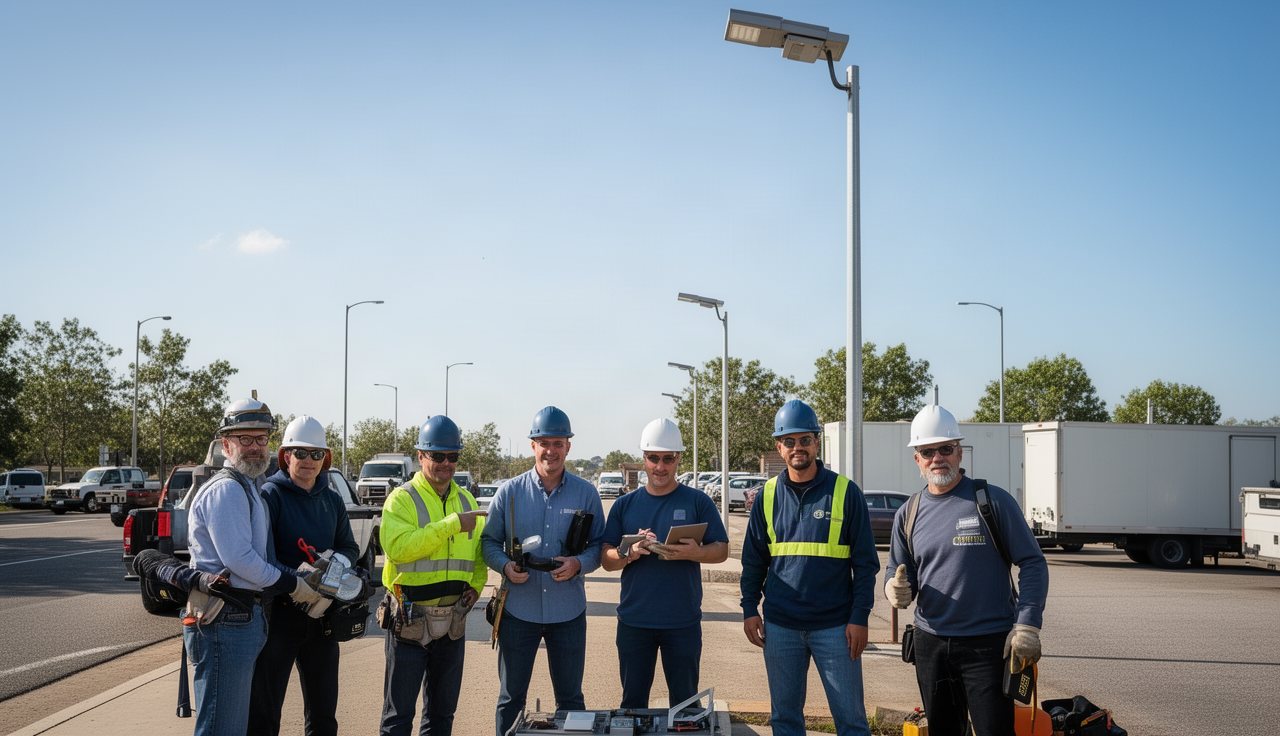
Replacement of legacy sodium cobra head luminaires across a municipal network, with each fixture photometrically verified for its street class. Dimming profiles were programmed for overnight hours, and the city received a full georeferenced inventory.
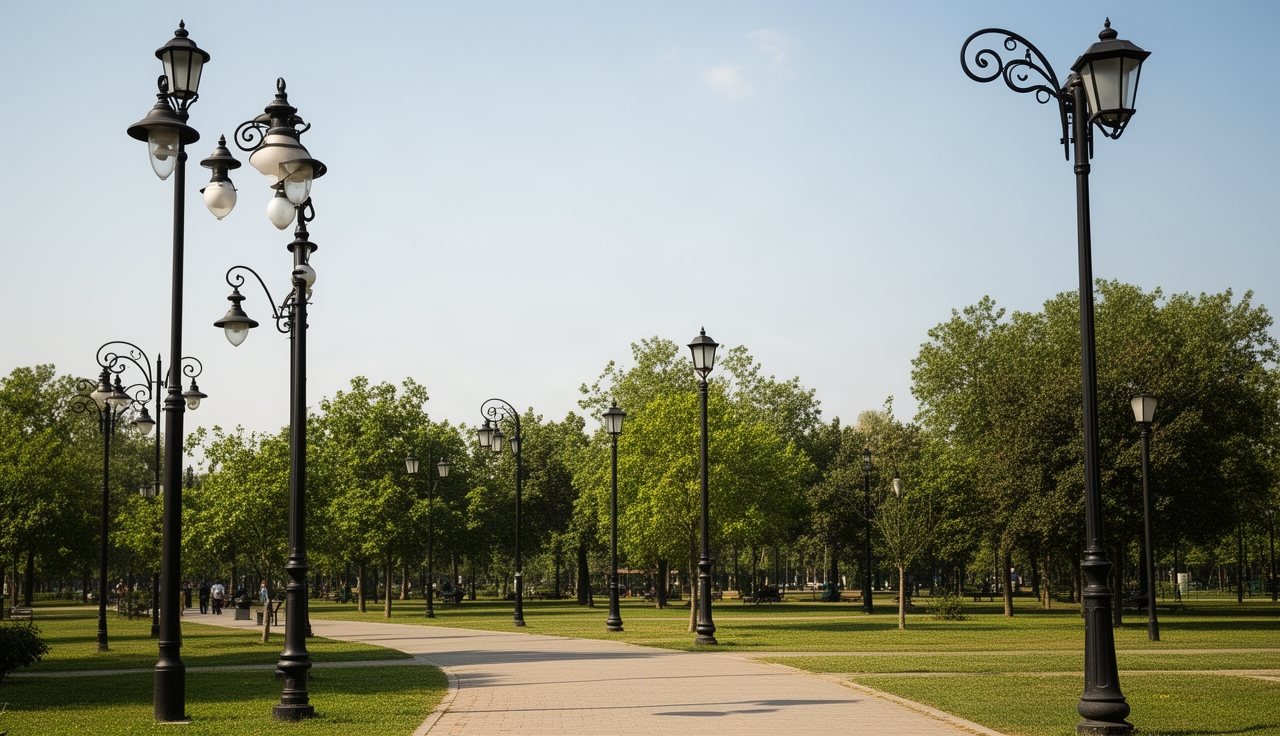
New ornamental poles, pedestrian luminaires and underground circuits along a revitalized commercial corridor. Layout balanced street and sidewalk illuminance, with glare control and warm color temperature suited to the district.
Client Feedback
The LED conversion was done on schedule and the street level results matched the photometric report. Residents noticed the difference immediately, and our energy bill dropped in the first full quarter.
High-mast work at night is not forgiving. Their crew was organized, safe and finished each lane closure ahead of time. Documentation on every tower was thorough.
We needed lighting for a trail through a sensitive area. They proposed shielded fixtures and adaptive dimming and trenched carefully around root zones. The result is safe and quiet at night.
From Our Desk
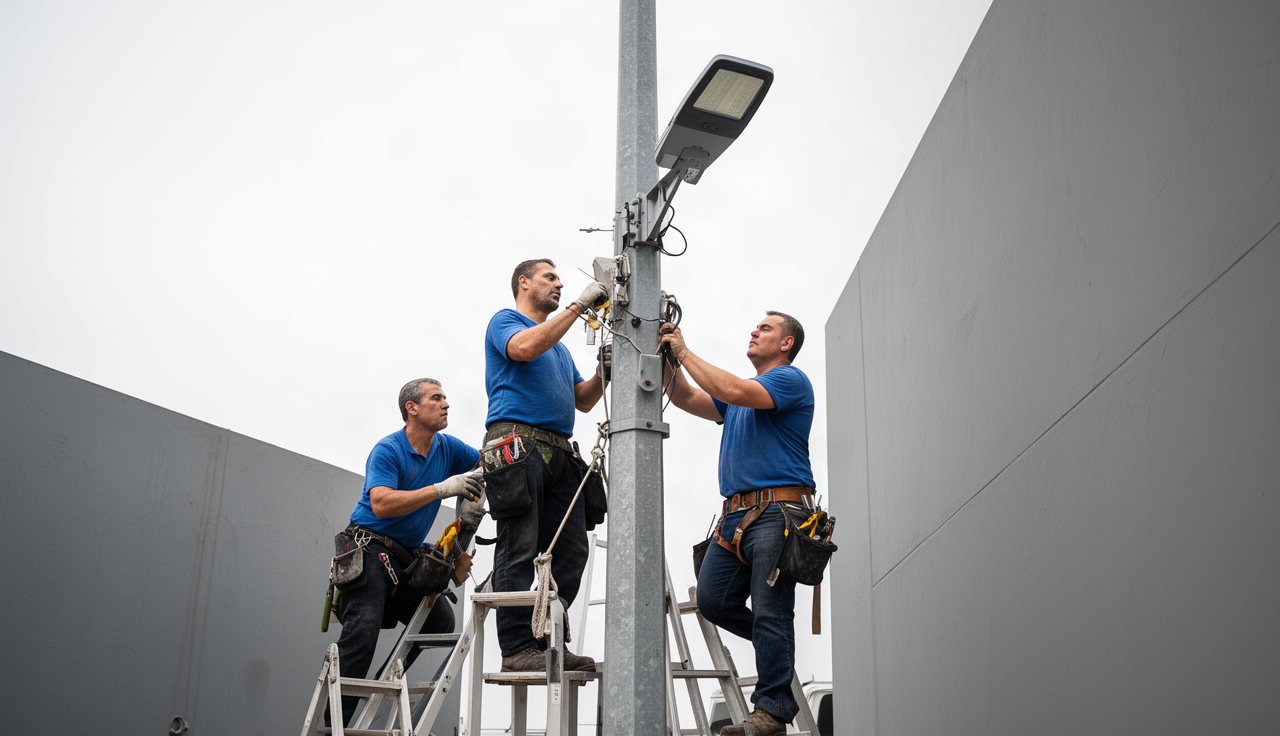
Adaptive dimming saves energy, but it must respect conflict areas and crossings. Here is how to build a schedule that keeps safety first.
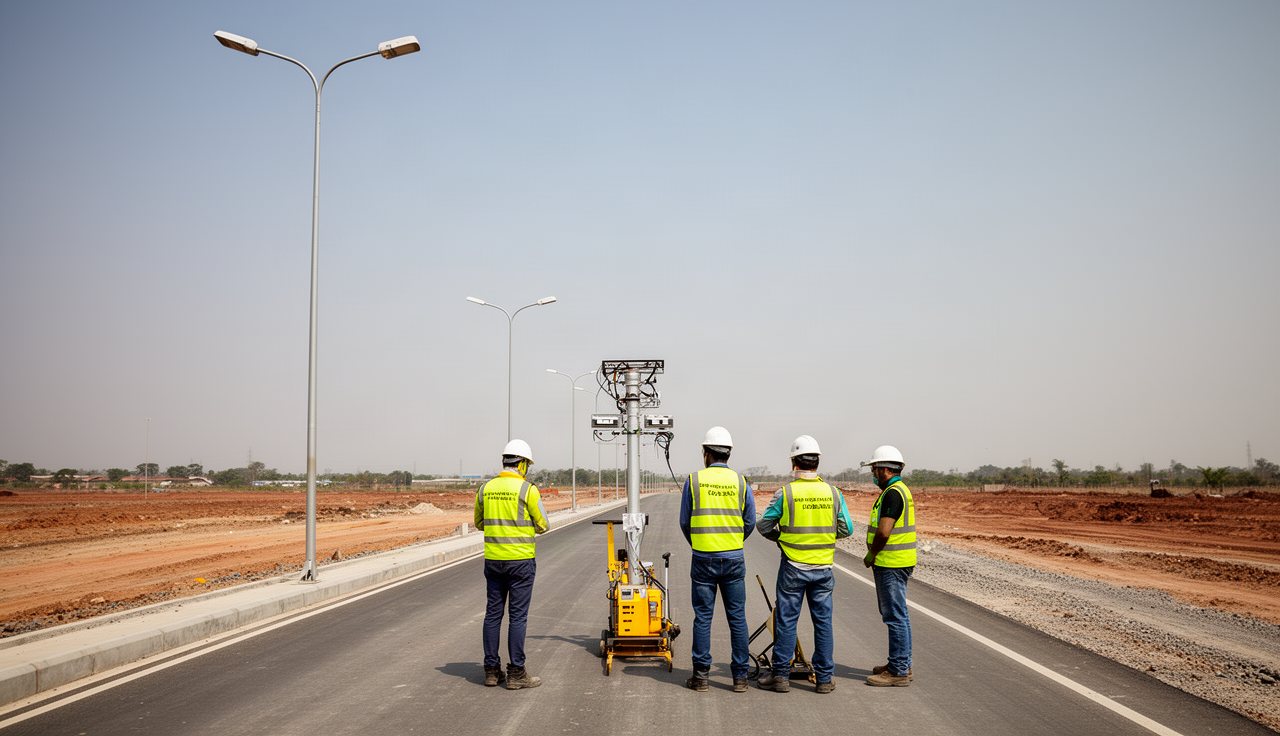
Complaints often trace to glare and color choices rather than brightness. A look at how to select LED color temperature and shielding that residents will accept.
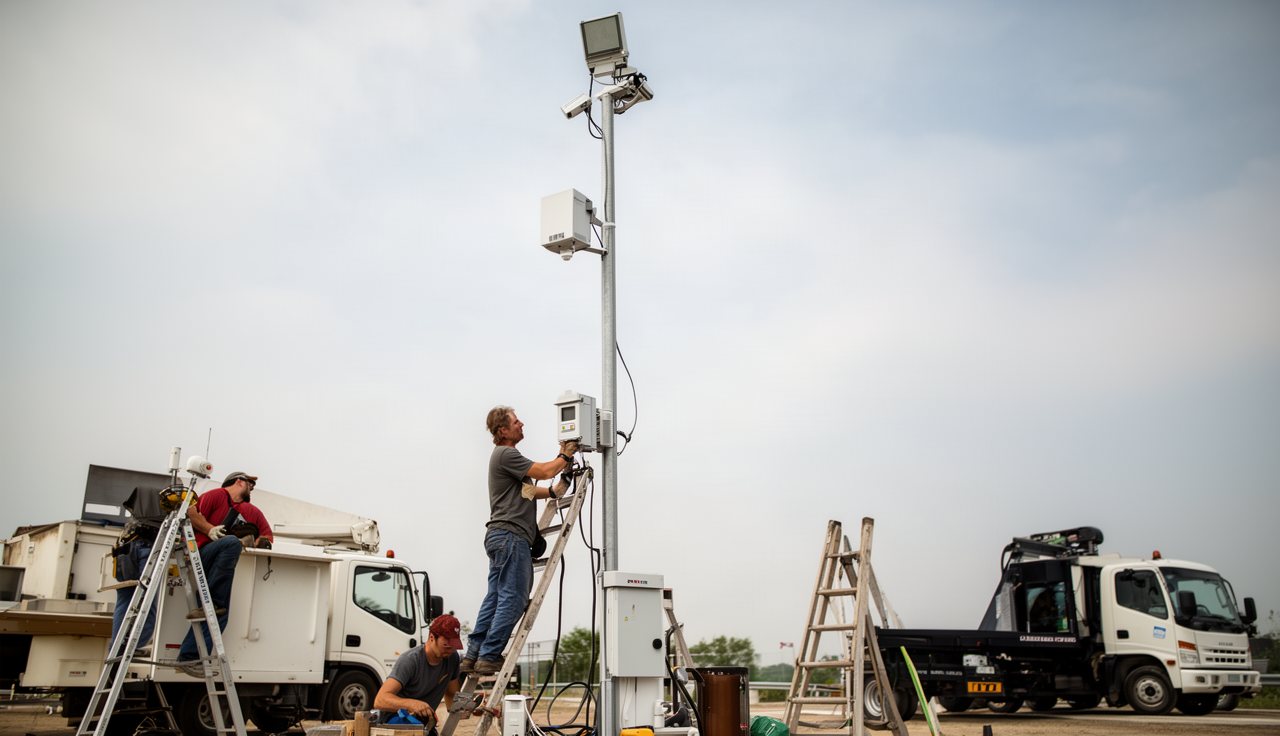
Success depends on more than fixture price. We cover inventory accuracy, tariff changes, optical selection and warranty terms that make or break a large retrofit program.
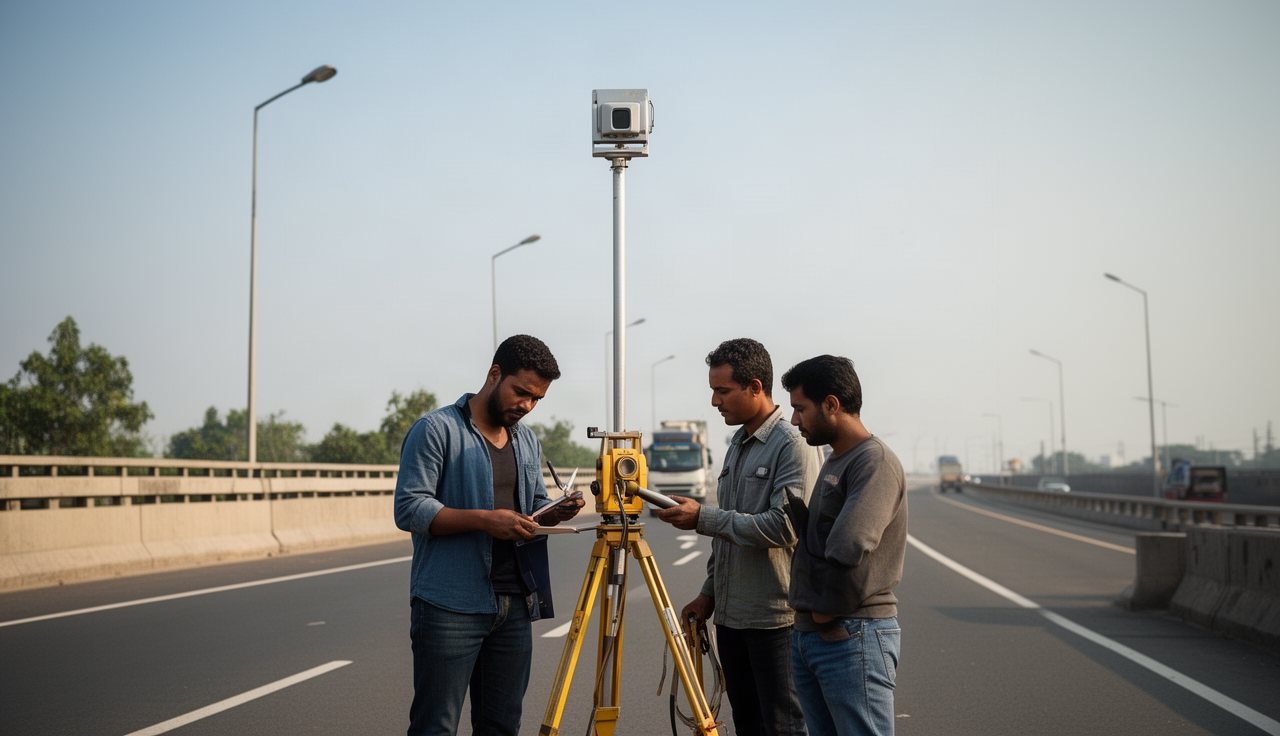
Undersized conductors cause dim fixtures and early driver failures. We explain how to size circuits and place feed points on long rural and highway runs.
Send TECHNILUM your fixture counts or pole list and we will return a photometric approach, a schedule and a documented energy savings estimate.
Photometric designs and retrofit proposals take about three weeks.
Questions & Answers
Target levels come from recognized IES roadway lighting recommendations, which vary by roadway classification, pedestrian activity and conflict areas. We run photometric calculations for illuminance or luminance and uniformity, then adjust pole spacing and luminaire distribution until the criteria are met efficiently.
Utility-owned systems have their own rules, and some work must be done by utility crews. We coordinate with utilities on ownership, tariffs and permitted work, and we perform what is allowed under contract while keeping responsibilities clearly defined.
Most agencies choose between roughly 3000K and 4000K. Warmer light reduces glare and blue content and is often preferred in residential areas, while neutral white can aid visual clarity on arterials. We help weigh community feedback, dark sky goals and visibility needs.
Yes. Many luminaires accept a standard control receptacle, and nodes can be added or luminaires with built-in controls installed. We evaluate wireless coverage, existing equipment and platform requirements before recommending a controls approach.
Safety hazards such as exposed conductors or damaged poles are handled first, followed by dark intersections and then isolated lamp outs. Repair windows are set by contract and tracked against pole identification numbers so recurring faults get root cause attention.
In most conversions from high-pressure sodium, connected load falls substantially, and adaptive dimming adds more savings. We record existing and new wattage fixture by fixture so projected savings are tied to real data, and we provide the documentation utilities often require.
Who We Are
TECHNILUM is an electrical contractor specializing in roadway, area and decorative lighting for public agencies and institutional owners. Our scope includes lighting design support, underground conduit and conductor installation, pole foundations, luminaire retrofit, control systems and long-term maintenance. We work with municipalities, transportation departments and utilities on projects ranging from neighborhood L
Send TECHNILUM your fixture counts or pole list and we will return a photometric approach, a schedule and a documented energy savings estimate.
Contact
Photometric designs and retrofit proposals take about three weeks.
Questions & Answers
Photometric designs and retrofit proposals take about three weeks.
Read MoreTarget levels come from recognized IES roadway lighting recommendations, which vary by roadway classification, pedestrian activity and conflict areas. We run photometric calculations for illuminance or luminance and uniformity, then adjust pole spacing and luminaire distribution until the criteria are met efficiently.
Utility-owned systems have their own rules, and some work must be done by utility crews. We coordinate with utilities on ownership, tariffs and permitted work, and we perform what is allowed under contract while keeping responsibilities clearly defined.
Most agencies choose between roughly 3000K and 4000K. Warmer light reduces glare and blue content and is often preferred in residential areas, while neutral white can aid visual clarity on arterials. We help weigh community feedback, dark sky goals and visibility needs.
Yes. Many luminaires accept a standard control receptacle, and nodes can be added or luminaires with built-in controls installed. We evaluate wireless coverage, existing equipment and platform requirements before recommending a controls approach.
Last updated:
This Privacy Policy explains how TECHNILUM ("we", "us", "our") collects, uses, discloses and protects information when you visit technilumstreetlight.com or contact us about our services. We keep data collection to what is necessary to answer inquiries and deliver contracted work.
Information you provide directly. When you submit an inquiry form, send an email or call us, we receive the details you choose to share: your name, organization, email address, telephone number, the service you are asking about and the content of your message.
Information collected automatically. Our web server records standard technical data for each request, including IP address, browser type and version, operating system, the pages requested, the date and time of the request and the referring page. This information is used for security monitoring, fault diagnosis and aggregate traffic statistics.
We do not knowingly collect special category data, financial account numbers or government identification numbers through this website, and we ask that you do not send such information through web forms or unencrypted email.
We use the information we collect to respond to your inquiry, prepare proposals and scopes of work, deliver and administer contracted services, maintain project and service records, meet legal, regulatory, insurance and procurement obligations, and protect the security and integrity of our systems.
We do not sell personal information. We do not use the information you provide for behavioral advertising, and we do not share it with advertising networks or data brokers.
Where data protection law requires a legal basis, we rely on: your consent, where you have voluntarily submitted an inquiry; the performance of a contract, where processing is necessary to quote, mobilize or deliver services; compliance with a legal obligation, including records retention, tax, safety and public procurement requirements; and our legitimate interests in operating, securing and improving our business, balanced against your rights.
We may share information with service providers who act on our instructions, such as email and hosting providers, and with subcontractors we engage where disclosure is necessary to deliver the service. These parties are permitted to use the information only for the purpose for which it was shared.
We may disclose information where required by law, court order, regulatory authority or a public client exercising audit rights under a contract, and where necessary to establish, exercise or defend legal claims.
Inquiry correspondence is retained for as long as needed to respond and for a reasonable period afterwards for business continuity. Project and contract records, including service logs, inspection records and photographic documentation, are retained for the period required by the contract, by applicable statute of limitations and by insurance and audit requirements, after which they are deleted or anonymized.
We apply administrative, technical and physical safeguards appropriate to the sensitivity of the information we hold, including transport encryption for this website, access controls on internal systems, role-based permissions and staff confidentiality obligations. No method of transmission or storage is completely secure, and we cannot guarantee absolute security.
Depending on where you live, you may have the right to request access to the personal information we hold about you, to request correction of inaccurate information, to request deletion, to object to or request restriction of certain processing, to request a copy in a portable format and to withdraw consent you previously gave.
To exercise any of these rights, write to info@technilumstreetlight.com. We will respond within the timeframe required by applicable law and may need to verify your identity before acting on a request.
Our service providers may process data in countries other than the one in which you reside. Where personal information is transferred across borders, we rely on lawful transfer mechanisms and require appropriate contractual safeguards from the receiving party.
Our services are directed to organizations and property owners, not to children. We do not knowingly collect personal information from children. If you believe a child has provided us with personal information, contact info@technilumstreetlight.com and we will delete it.
This website may link to third-party sites, such as standards bodies or regulatory resources. We are not responsible for the privacy practices or content of those sites, and we encourage you to review their policies before providing information.
We may update this Privacy Policy to reflect changes in our practices, technology or legal requirements. The revision date at the top of this page indicates when it was last changed. Material changes will be made evident on this page.
Questions, requests or complaints regarding this policy may be addressed to TECHNILUM, Domaine de Lézigno, RN112, 34500 Béziers, or by email to info@technilumstreetlight.com. You may also have the right to lodge a complaint with your local data protection authority.
Last updated:
These Terms govern your use of technilumstreetlight.com and describe the basis on which TECHNILUM provides information through this website. Separate written contracts govern any services we perform for you; nothing on this website creates a contract or an offer capable of acceptance.
By accessing or using this website you agree to these Terms. If you do not agree, please do not use the site. We may revise these Terms at any time by posting an updated version; your continued use after a revision constitutes acceptance of the revised Terms.
Descriptions of services, capabilities, standards, methods and past work are provided for general information. They are not technical specifications, engineering advice or a representation that a particular method is suitable for your site or your regulatory environment.
Capability, capacity and availability statements reflect our general practice and may change. Project figures and performance indicators are approximate and may be rounded or aggregated across contracts.
Submitting an inquiry through this website does not create a contract, reserve capacity or oblige either party to proceed. Services are performed only under a signed agreement, purchase order or awarded contract that sets out scope, specifications, schedule, price and terms. Where this website and a signed contract conflict, the contract governs.
You may view, download and print pages from this website for your own internal evaluation and procurement purposes. You may not copy, republish, sell, scrape, systematically extract or use automated means to access the site, nor use the site in any way that interferes with its operation or security, nor attempt to gain unauthorized access to any system or network connected to it.
All text, graphics, layout, photographs, illustrations, logos and other material on this website are owned by TECHNILUM or used with permission and are protected by applicable intellectual property laws. Trademarks, standards names and certification marks referenced on this site remain the property of their respective owners and are used for identification only.
Do not send confidential, proprietary or sensitive information through web forms. Information you submit through this website is not treated as confidential unless a confidentiality agreement is already in place between us, and we may use it to respond to and record your inquiry.
Links to third-party websites, standards and publications are provided for convenience. We do not control and are not responsible for the content, accuracy or availability of third-party material, and a link does not imply endorsement.
This website is provided on an "as is" and "as available" basis. To the fullest extent permitted by law, we disclaim all warranties, express or implied, including warranties of merchantability, fitness for a particular purpose, accuracy, non-infringement and uninterrupted or error-free operation.
To the fullest extent permitted by law, TECHNILUM will not be liable for any indirect, incidental, special, consequential or punitive damages, or for loss of profit, revenue, data or goodwill, arising out of or in connection with your use of this website, whether based in contract, tort, statute or otherwise. Nothing in these Terms limits liability that cannot lawfully be limited.
You agree to indemnify and hold harmless TECHNILUM and its personnel from claims, losses and expenses arising out of your misuse of this website or your breach of these Terms.
We aim to keep this website available but do not guarantee uninterrupted access. We may suspend, withdraw or restrict all or part of the site for maintenance, security or business reasons without notice.
These Terms are governed by the laws applicable at the principal place of business of TECHNILUM, without regard to conflict-of-law rules. If any provision is found unenforceable, the remaining provisions continue in full force.
Questions about these Terms may be sent to info@technilumstreetlight.com or addressed to TECHNILUM, Domaine de Lézigno, RN112, 34500 Béziers.
Last updated:
This Cookie Policy explains how technilumstreetlight.com uses cookies and similar local storage. We use the minimum necessary for the site to function and do not use advertising or cross-site tracking cookies.
Last updated:
The information on technilumstreetlight.com is published by TECHNILUM for general informational purposes. It is not professional advice for any particular site, project or regulatory situation.
Content on this website does not constitute engineering, environmental, legal, safety, regulatory or financial advice, and must not be relied upon as a substitute for a site-specific assessment by a qualified professional engaged under contract. Conditions, codes and permitting requirements vary by jurisdiction and by site.
Descriptions of past work, performance indicators and outcomes describe what was achieved under the conditions of those specific contracts. They are not a prediction, promise or guarantee of results on any other project. Every scope, site and schedule is different.
We take reasonable care to keep this website accurate and current, but we make no representation or warranty that content is complete, correct or up to date. Standards, regulations, specifications and our own methods change over time, and the site may not reflect the most recent position.
Images, illustrations and diagrams on this website are illustrative and may be representative rather than photographs of a specific project. Statistics and project figures are approximate, may be rounded and may aggregate results across multiple contracts and years.
References to standards, codes, certifications or industry bodies are for identification and context. Such references do not imply endorsement by, affiliation with, or accreditation granted by those organizations beyond what is documented in the certificates we provide on request.
Links to other websites are provided for convenience only. We do not control third-party content and accept no responsibility for its accuracy, legality or availability. Inclusion of a link is not an endorsement.
To the fullest extent permitted by law, TECHNILUM accepts no liability for any loss or damage arising from reliance on information published on this website. Where we perform work for you, our obligations and liability are governed exclusively by the signed contract between us.
If you believe information on this site is inaccurate or out of date, please tell us at info@technilumstreetlight.com so we can review it.
Last updated:
TECHNILUM is committed to making technilumstreetlight.com usable by as many people as possible, including people who use assistive technology. This statement explains the measures we have taken and how to report a problem.
We aim to meet the Web Content Accessibility Guidelines (WCAG) 2.1 at Level AA as a target standard. Accessibility is treated as an ongoing obligation rather than a one-time project, and we review the site when we make significant changes to its structure or content.
Semantic HTML structure with a single main landmark, logical heading order and descriptive page titles, so screen reader users can navigate by structure.
A visible skip-to-content link, keyboard-operable navigation and menus, and focus styles that remain visible when navigating without a mouse.
Text and interface colors checked for contrast against their backgrounds, layouts that reflow at narrow widths and support browser text resizing without loss of content, and descriptive alternative text or accessible labels for images and icons that carry meaning.
Form fields with programmatically associated labels, required fields identified in text rather than by color alone, and link text that makes sense out of context.
Some decorative illustrations are presented without detailed descriptions because they convey no information beyond the surrounding text. Documents published in formats such as PDF may not meet the same standard as the website itself; we will provide an accessible alternative on request.
This website is designed to work with current versions of major browsers on desktop and mobile, used together with the assistive technologies available on those platforms. It may not perform as expected in browsers that are no longer supported by their vendor.
If you encounter a barrier on this website, or need information from it in an alternative format such as large print, plain text or a document read aloud, contact us at info@technilumstreetlight.com or +33 4 67 90 67 67. Please tell us the page address and what you were trying to do so we can reproduce the problem.
We aim to acknowledge accessibility reports within five business days and will tell you what we intend to do and when. If an immediate fix is not possible, we will provide the information you needed by another means.
If you are not satisfied with our response, you may escalate the matter to the body responsible for accessibility enforcement in your jurisdiction. This statement is reviewed periodically and whenever the website undergoes substantial change.
Photographs on this website are used under open licenses that permit commercial use.
The following images are published under Creative Commons licenses and are listed with their original title and attribution as given by the source.
Outages Answered Fast
We design, install and maintain roadway and public area lighting that improves nighttime visibility, lowers energy use and keeps the right light on the street instead of in the sky.
Questions & Answers
Target levels come from recognized IES roadway lighting recommendations, which vary by roadway classification, pedestrian activity and conflict areas. We run photometric calculations for illuminance or luminance and uniformity, then adjust pole spacing and luminaire distribution until the criteria are met efficiently.
Utility-owned systems have their own rules, and some work must be done by utility crews. We coordinate with utilities on ownership, tariffs and permitted work, and we perform what is allowed under contract while keeping responsibilities clearly defined.
Most agencies choose between roughly 3000K and 4000K. Warmer light reduces glare and blue content and is often preferred in residential areas, while neutral white can aid visual clarity on arterials. We help weigh community feedback, dark sky goals and visibility needs.
Yes. Many luminaires accept a standard control receptacle, and nodes can be added or luminaires with built-in controls installed. We evaluate wireless coverage, existing equipment and platform requirements before recommending a controls approach.
Safety hazards such as exposed conductors or damaged poles are handled first, followed by dark intersections and then isolated lamp outs. Repair windows are set by contract and tracked against pole identification numbers so recurring faults get root cause attention.
In most conversions from high-pressure sodium, connected load falls substantially, and adaptive dimming adds more savings. We record existing and new wattage fixture by fixture so projected savings are tied to real data, and we provide the documentation utilities often require.
Our Services
Installation and maintenance of high-mast towers, interchange lighting and tunnel luminaires that must perform under demanding traffic and safety conditions. Work includes lowering device service, lantern carri
View DetailsOrnamental poles, bollards, pathway luminaires and festoon systems designed to serve walkers, cyclists and public gathering spaces. We balance vertical illuminance on faces and surfaces with glare control and d
View DetailsInstallation of networked lighting controllers, photocells and nodes that report status, energy consumption and faults to a central management platform. Schedules and dimming profiles can be tuned by street typ
View DetailsFloodlighting and area lighting for parking facilities, sports fields, plazas, rail yards and industrial yards, with spill and glare control to protect neighbors. Layouts are verified against project-specific l
View DetailsConstruction of lighting systems from trench to luminaire, including conduit, wire, pull boxes, drilled or precast foundations, anchor bolt assemblies, poles and bracket arms. We follow the National Electrical
View DetailsScheduled group relamping and driver replacement, outage patrols, cable fault location and repair of poles damaged by vehicle impact or storms. Each work order is logged against a pole identification number, so
View DetailsOur Advantages
We show illuminance and uniformity results in calculation reports ahead of procurement, which prevents over-lighting, under-lighting and expensive change orders after poles are set.
Outage reports are triaged by safety risk, with exposed wiring and knocked-down poles handled first and routine lamp outs scheduled in grouped, efficient routes.
Shielded luminaires, appropriate color temperatures and careful aiming limit light trespass and sky glow, which keeps neighbors, ecologists and astronomers on your side.
We document before and after wattage by fixture so energy savings are calculated from measured data rather than brochure claims.
Every pole, luminaire, controller and circuit is tagged and logged with location and installation date, creating a living inventory that supports budgeting and warranty claims.
Lighting circuits carry real voltage in public right-of-way. Our crews are licensed and trained for energized work safety, utility coordination and cable fault location.
Fixture, wattage, controls, pole type and repair history are held per asset, so an outage, a claim or a budget request is answered from data.
Reported outages are repaired within agreed days and closed against the asset record, as dark streets are the complaint residents actually make.
Baseline and post-retrofit consumption are measured and compared, because a projected saving and a billed saving are frequently not the same number.
Client Feedback
The LED conversion was done on schedule and the street level results matched the photometric report. Residents noticed the difference immediately, and our energy bill dropped in the first full quarter.
High-mast work at night is not forgiving. Their crew was organized, safe and finished each lane closure ahead of time. Documentation on every tower was thorough.
We needed lighting for a trail through a sensitive area. They proposed shielded fixtures and adaptive dimming and trenched carefully around root zones. The result is safe and quiet at night.
Who We Are
TECHNILUM is an electrical contractor specializing in roadway, area and decorative lighting for public agencies and institutional owners. Our scope includes lighting design support, underground conduit and conductor installation, pole foundations, luminaire retrofit, control systems and long-term maintenance. We work with municipalities, transportation departments and utilities on projects ranging from neighborhood L
Our Process
We inventory existing poles, fixtures and circuits, measure light levels where needed and review electrical capacity, utility ownership and condition of foundations to establish a clear baseline.
Layouts, calculation reports, luminaire submittals and circuit drawings are prepared for review. Utility, permit and traffic control approvals are coordinated before field work starts.
Crews install foundations, conduit, poles and luminaires, then test circuits for insulation, continuity and proper grounding before energizing in a controlled sequence.
After aiming and control programming, we verify night performance in the field, deliver as-built records and enter the system into a maintenance schedule with outage tracking.
Send TECHNILUM your fixture counts or pole list and we will return a photometric approach, a schedule and a documented energy savings estimate.